By David Jenkins, Digital Director
Despite being the most popular racing series in the world, Formula 1 struggled for decades to truly break into the American market. Multiple attempts came and went with limited staying power. Yet in just the last few years, F1’s popularity in the United States has exploded.
A new ownership group, a hit Netflix series, and newly established American races all get some of the credit for the surge here. Each is part of the broader story that fueled F1’s growth in the US, a collection of strategic decisions layered on top of one another.
In that sense, the rise of Formula 1 is a masterclass marketers and business leaders can learn from. This blog will explore how F1 finally won over America through the lens of a marketer.
Building On an Established Brand
Before we break down the strategy, it’s important to know what F1 already had going in its favor. Like many companies that possess an excellent product but struggle to promote it effectively, Formula 1 had something remarkable long before its recent American boom, especially in the eyes of those who were paying attention.
- A truly global product: From its founding in 1950, Formula 1 was never a national racing league. From the start, it has been positioned as the pinnacle of motorsport, with teams, drivers, and races spread across multiple continents. Whether Americans tuned in or not, F1 already occupied the top step of the podium in terms of prestige and competitive level.
- European status in the American imagination: F1 is deeply Euro-centric in its origins, circuits, and culture. For many American consumers, European sports and lifestyle carry a certain prestige. The same instinct that draws people to Swiss watches, Italian cars, and French perfume can also draw them to a world championship that runs through Monaco, Monza, and Budapest rather than Daytona and Talladega.
- A blank slate in the US consciousness: In practical terms, F1 didn’t have much of a mainstream footprint in the United States. For many newer fans, there was no long history of disappointment or failed attempts to overcome. Instead, it arrived as something fresh: an elite, global product that felt new and worth exploring, even if it had technically been around for decades.
- A category with upside in the US: Racing has always been popular in America, but the dominant perception of motorsport here skewed very specific. For many casual viewers, “racing” meant NASCAR, and NASCAR carried a strong regional and cultural identity. IndyCar, with its open-wheel cars similar in appearance to F1 cars, hosts the largest single-day sporting event in the country, yet it has not been promoted with the same global narrative or lifestyle packaging. This left an opening: a sophisticated, international racing series could occupy mental space that traditional American series did not, simply by framing itself differently.
- New ownership with a wider vision: The final advantage was leadership. When Liberty Media took over in 2017, F1 didn’t just gain new owners; it gained a group that recognized its untapped potential in markets like the United States. The product was already world-class on track. What changed was the willingness to invest in storytelling, distribution, and event design at a level that matched the quality of the racing.
Now that the stage is set, let’s look at how F1 took what it had and exploded in America.
The American Growth Strategy
- They embraced storytelling: The on-track action was always strong, but that alone was not enough to attract the casual fans who help a series grow. F1 leaned into human stories, rivalries, and personalities you could follow even if you did not understand every technical detail.
- They turned drivers into recognizable characters and brands: Drivers became more visible and open through Netflix and social media. Instead of anonymous helmets, fans saw real people with emotions, backstories, and conflicts. That made it much easier for new fans to pick favorites and stay engaged.
- They promoted their storytelling where people already were: Instead of expecting new fans to come to them, they put the content on Netflix and social platforms. The series ‘Drive to Survive’ and a constant stream of short clips, behind-the-scenes footage, and explainer content made F1 easy to discover, binge, and share.
- They treated digital as an “always on” channel: F1 moved from tightly controlled, old school media to a steady rhythm of digital content. Memes, highlights, interviews, and explainers kept F1 in people’s feeds between race weekends, so the sport felt present year-round rather than only on Sundays.
- They kept it elite while opening the doors: The sport kept its high-end aura, global glamour, and sense of exclusivity, but invited the middle class into that world emotionally. Anything that gives everyday people a taste of a luxury experience tends to have strong appeal, and F1 leaned into that dynamic.
- They reframed the series as a lifestyle, not just racing: F1 became about travel, cities, fashion, relationships, and culture, with the race as the centerpiece rather than the only story. That repositioned F1 from a niche motorsport to a lifestyle and entertainment brand.
- They made the product easier to understand: Through graphics, commentary, and explainer content, F1 lowered the barrier for new viewers. You didn’t need to know every rule to enjoy a race, which made it less intimidating for casual fans to try out and then stick with the sport.
- They offered a viewing experience that felt premium: Commercial-free race broadcasts in the United States created a more cinematic, uninterrupted experience. Compared to most American sports coverage, watching F1 felt smooth, intentional, and high quality.
- They planted flags in key US markets: High-profile races in Miami and Las Vegas turned F1 weekends into destination events. Those cities are media friendly, influencer friendly, and perfectly aligned with the luxury and entertainment positioning F1 wanted to project.
Strategic Moves, Big Rewards
Overall, F1 didn’t rely on anything magical or mysterious. They simply followed a clear plan of giving prospective fans something they wanted. They met people where they already were, showed up with something fun, cool, and new, and stayed consistent. The growth is impressive, but the moves they made are not hard to understand.
That’s an important lesson for business owners: Growth doesn’t require an esoteric strategy that only insiders can grasp, and it doesn’t reward a stubborn “if you build it, they will come” mindset. F1’s rise in America will stand as a case study in making strategic yet bold moves into a new market and reaping the rewards.
If you want to drive your brand to the next level, reach new markets, and unlock new levels of growth, Alpha Dog Advertising is ready to take you there. We help businesses clarify their story, show up where their audience is, and turn attention into measurable results. Contact us today to start the conversation.
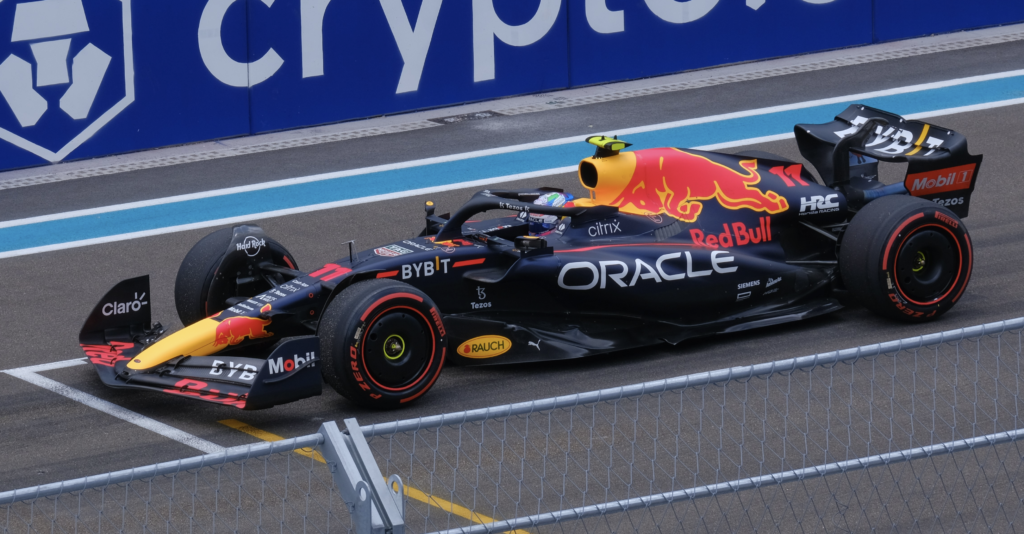
Image Credit: “Sergio Pérez in the RB18 getting ready for a practice start at the Miami GP” by Dcmaradiaga, via Wikimedia Commons, licensed under Creative Commons Attribution-ShareAlike 4.0 International (CC BY-SA 4.0). https://upload.wikimedia.org/wikipedia/commons/d/d6/2022_Miami_GP_-_Red_Bull_RB18_of_Sergio_P%C3%A9rez.jpg