Home » Rebranding vs. Refinement: Why Some Brands Thrive in Market Shifts and Others Miss the Mark
By David Jenkins, Digital Director
Taking a business from humble beginnings to success is one challenge. Keeping it relevant and profitable for decades is another. The true test of a brand is not growth alone, but endurance. Trends shift. Technology evolves. Consumer preferences change. Over time, even the strongest companies face moments that test their brand identity and positioning.
When those moments arrive, leaders have a choice: Double down on who they are, pivot strategically, make a full reinvention, or land somewhere in between. The difference between long-term strength and gradual decline often lies in that decision. Let’s examine several companies that faced major market shifts and either reinforced their identity or drifted from it.
In the 1980s, clear spirits were in and brown spirits were out. Vodka was modern, sleek, and growing rapidly. It fit nightclub culture and aligned with younger consumers seeking lighter, cleaner drinks. Bourbon, by contrast, was widely viewed as old-fashioned.
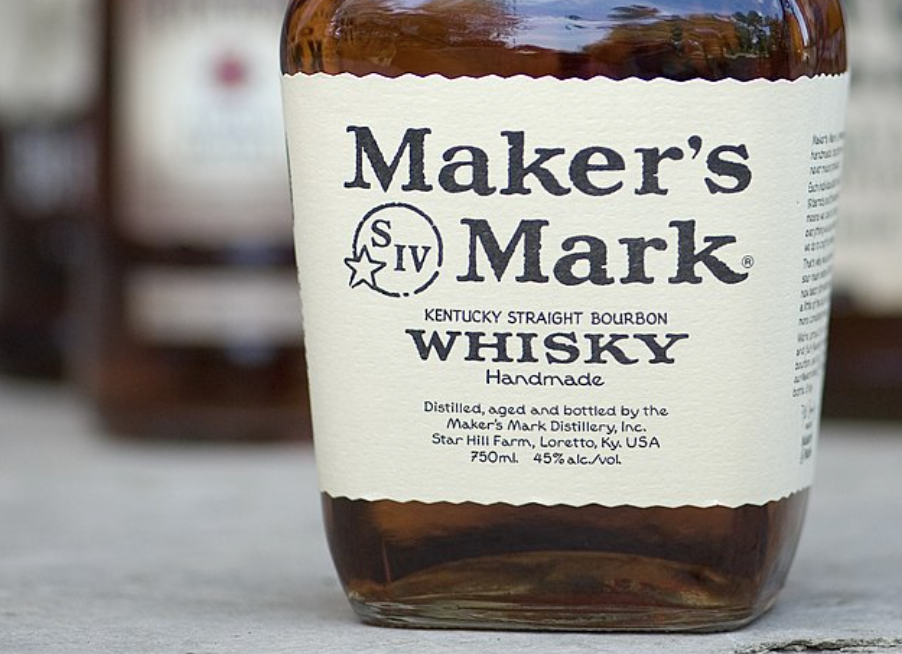
For a bourbon brand like Maker’s Mark, this presented a serious strategic dilemma. Do you chase momentum? Do you launch a vodka line? Do you alter your product to align with changing consumer trends?
At the time, many American whiskey brands were struggling. Consumption had declined sharply, and the economic pressure to adapt was strong. Distilleries consolidated, cut costs, and experimented with lighter profiles.
Maker’s Mark chose a different path. They didn’t dilute their bourbon style. They didn’t change their mash bill. They didn’t introduce vodka to hedge against declining demand. Instead of repositioning toward modern trends, they leaned further into what made them distinct.
While vodka brands promoted clean and cosmopolitan lifestyles, Maker’s emphasized craftsmanship, heritage, and its Kentucky roots. The red wax seal, the wheated bourbon profile, and the small-batch perception weren’t abandoned in pursuit of relevance — they were reinforced.
Doubling down on a declining category carries risk. It requires confidence that brand identity will outlast short-term fashion. In this case, it paid off. When bourbon experienced a resurgence in the 1990s and early 2000s, Maker’s Mark didn’t need to reinvent itself. The brand had remained consistent, and that consistency became a competitive advantage. Their refusal to chase short-term momentum positioned them for long-term growth.
Consider Pizza Hut in the mid-2010s.
During this period, brewpubs, artisan pizza concepts, and chef-driven fast casual restaurants were surging in popularity. Brands like MOD and Blaze gained traction with customizable menus and a craft aesthetic, making many legacy chain restaurants feel dated by comparison.
With consumers gravitating toward wood-fired pizza and local IPAs rather than stuffed-crust-and-soda bundles, Pizza Hut felt the pressure to modernize. It introduced new crust flavors, specialty sauces, and premium toppings in an effort to reposition its brand. The menu expanded significantly and grew more complex.
Historically, Pizza Hut had stood for family dining, comfort, and value. This new direction attempted to compete in the elevated craft-inspired space. The shift blurred the brand’s identity.
The result wasn’t a collapse, but it wasn’t a successful reinvention either. Sales lagged competitors as the artisan push failed to redefine Pizza Hut’s market position. Eventually, the menu was simplified, and the brand refocused on its core strengths.
The lesson isn’t that adaptation is wrong. Markets change. But abandoning core positioning in pursuit of trend-driven relevance often creates confusion rather than growth. When trends push against your brand, refinement is often more effective than reinvention.
Rolex provides another example of conviction during disruption.
Throughout the 20th century, Rolex established itself as the aspirational watch brand. It was worn by political leaders, explorers, and elite athletes. While expensive, it occupied a unique space in luxury watchmaking. It was prestigious yet attainable.
Then the industry changed.
In 1969, Seiko introduced the Astron, the first commercially available quartz wristwatch. Quartz technology was cheaper, more accurate, and easier to scale. Many brands pivoted aggressively toward quartz. Others disappeared. The Quartz Crisis devastated much of the Swiss mechanical watch industry.
Rolex did release a quartz model, the Oysterquartz, but this wasn’t a philosophical shift. It was a measured response. The company didn’t abandon mechanical craftsmanship or reposition itself as a mass-market technology brand. Instead, Rolex reinforced its heritage, engineering standards, durability, and symbolic status. It leaned further into the narrative of longevity and excellence rather than competing on price or pure accuracy.
Over time, that discipline strengthened the brand. Today, certain Rolex models command multi-year waiting lists and significant secondary market premiums. What once appeared to be a technological threat ultimately reinforced Rolex’s positioning, not as the most accurate watch, but as the most desirable.
A more recent example can be found in Cracker Barrel.
Casual dining traffic softened following 2020. Inflation was pressuring middle-income households, a key demographic for the brand, and younger consumers increasingly viewed Cracker Barrel as nostalgic and dated rather than culturally relevant. Leadership publicly acknowledged the brand needed modernization.
The company launched a broad refresh. Its logo was simplified, and iconic elements like Uncle Herschel were softened or removed. Select locations were redesigned with lighter décor. New menu items were introduced to broaden appeal.
The reaction was swift. Customers criticized the redesign online, arguing that the brand had stripped away the charm that differentiated it. The logo change was walked back; however, sales pressures didn’t immediately reverse, and investor confidence remained fragile.
While the logo fiasco didn’t destroy the company, it failed to generate the intended momentum and exposed a strategic tension between modernization and identity. When a brand built on heritage signals uncertainty about its core positioning, it risks weakening loyalty without guaranteeing new growth.
Modernization is necessary. But when it feels like dilution rather than refinement, the market responds.
Brands are built over time through repetition, trust, and consistency. While evolution is essential, identity shifts can face harsh consequences. Businesses are often better served by refining what makes them distinctive rather than abandoning it.
The lesson is clear: Make your identity stronger. Make it sharper. Make it compelling. Let the market respond to what makes you different, not to how closely you resemble everyone else.
If your company is navigating change and you want clarity on how to evolve without sacrificing brand equity, we’d be glad to help. Contact Alpha Dog Advertising to start the conversation.